

04 May 2026
EPDM vs PVC Gaskets: Which Is Better?


A worn-out or failing refrigerator seal can increase a unit’s energy consumption by up to 11%. When the seal fails, cold air escapes, warm air infiltrates, and your compressor works overtime. Industry studies show that worn gaskets account for up to 21% of a unit’s total thermal load. Which is why choosing the right refrigeration gasket material is an important financial decision for manufacturers.
Procurement teams frequently find themselves weighing EPDM vs PVC gaskets. Both materials offer distinct properties, but making the wrong choice directly affects the appliance’s lifespan and the business’s daily operating costs.
In this guide, we’ll walk through the differences between EPDM and PVC, compare their performance in real-world commercial environments, and explore why engineered PVC remains the industry standard for most applications.
Understanding the Base Materials: EPDM and PVC
Ethylene Propylene Diene Monomer (EPDM)
EPDM is a synthetic rubber created by polymerizing ethylene, propylene, and a diene component. It operates as a thermoset elastomer, and this specific polymer chain structure gives EPDM a high degree of natural stretch. EPDM also features exceptional resistance to extreme outdoor weather and UV radiation
Polyvinyl Chloride (PVC)
PVC is an adaptable thermoplastic polymer produced by polymerizing vinyl chloride. In its purest natural state, PVC is a hard and rigid plastic. Manufacturers add specialized plasticizers and modifiers to create the soft, pliable compound required for refrigerator doors. Because of its adaptability and cost-efficiency, it is one of the most widely produced synthetic plastic polymers in the world.
You can read a detailed breakdown of the chemical processes and additives in our guide, “How is PVC Made?“
Key Performance Differences: EPDM vs PVC Gaskets
When evaluating a PVC gasket vs EPDM, we should compare how each material handles the specific mechanical and environmental stresses of a cold storage system.
1. Temperature Range and Cold Resistance
EPDM maintains full elasticity in deep-freeze conditions down to -50°C and can handle heat up to +150°C. Standard PVC operates reliably between -20°C and +70°C. High-quality engineered PVC gaskets incorporate specific cold-resistance additives that enable them to perform reliably in freezing conditions without cracking.
2. Flexibility and Elastic Recovery
A fridge door gasket material handles thousands of compressions as doors open and close. EPDM has a high elastic recovery and maintains consistent sealing pressure over decades. Lower-grade PVC can experience plasticizer migration where the softening agents slowly leave the compound over time. Premium PVC compounds use advanced stabilizers to lock these plasticizers in place, maintaining a flush contact with the door frame for years.
3. Flame Resistance and Safety
Standard EPDM is a hydrocarbon rubber that burns easily unless treated with expensive fire-retardant chemicals. PVC naturally contains chlorine, making it inherently flame-retardant and self-extinguishing. This built-in fire resistance provides an essential safety layer in commercial kitchens and high-density industrial facilities.
4. Color Options and Aesthetics
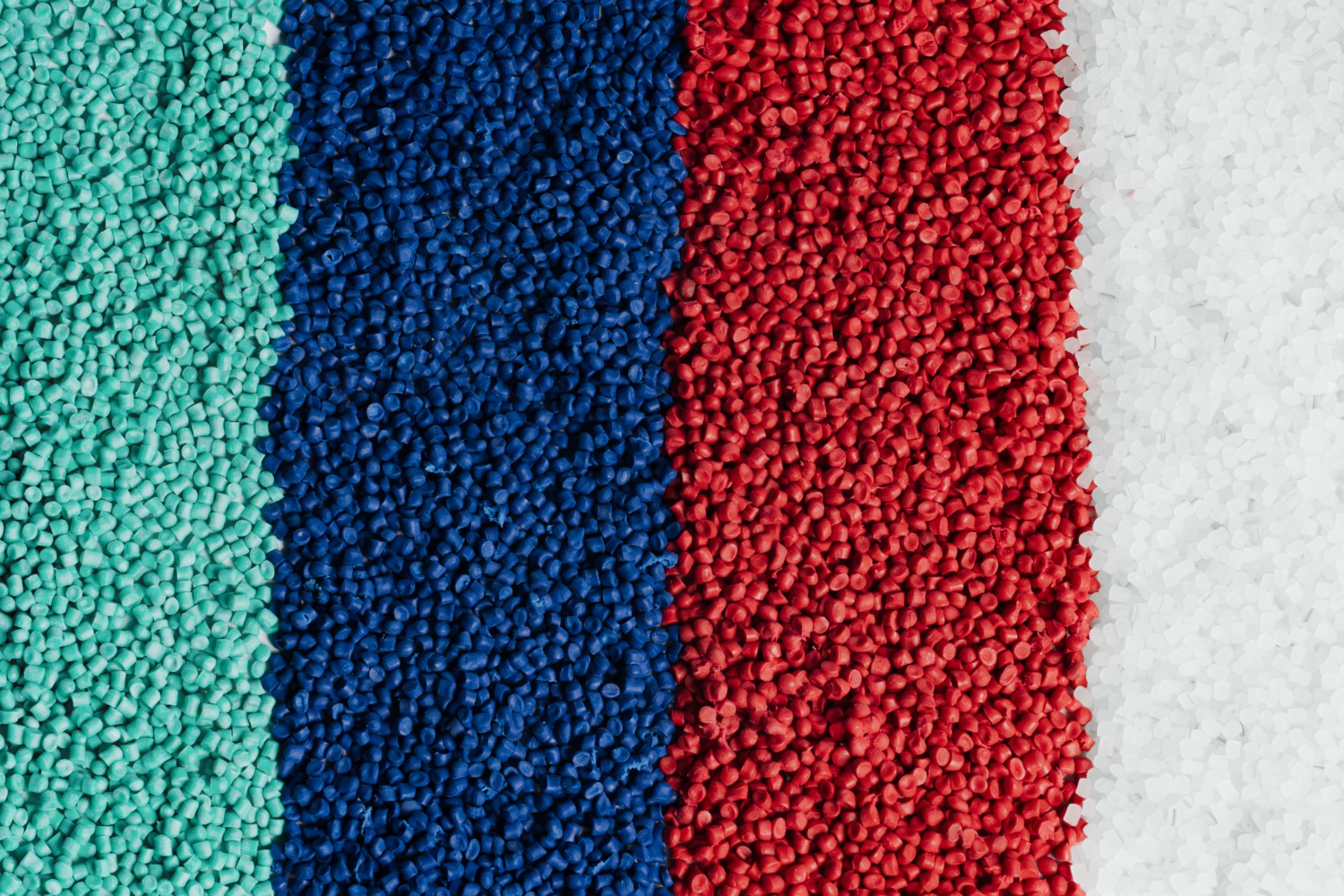
EPDM is almost exclusively black because carbon black is required during its compounding and curing process. This limits design choices for consumer appliances. PVC readily accepts pigments during production. Manufacturers can extrude PVC gaskets in white, grey, or custom colors to perfectly match the refrigerator body.
5. Chemical and Environmental Resistance
EPDM easily handles prolonged exposure to water, steam, acids, and UV rays. PVC offers superior resistance to animal fats, cooking oils, greases, and industrial fluids.
6. Cost, Lifespan, and Scalability
EPDM carries a higher upfront cost and requires a complex manufacturing process. It can last over 20 years in suitable conditions. PVC has a lower initial cost and moves efficiently through the extrusion cycle. This makes it scalable for high-volume appliance manufacturing.
Choosing a Gasket Material Based on Application
There is no single perfect material. The right choice depends on the specific temperature demands and environmental conditions of the refrigeration unit:
Industrial Blast Freezers and Outdoor Units
If you are sealing a commercial blast freezer operating at -40°C, EPDM is the better option. Its extreme temperature tolerance prevents it from shattering or shrinking in deep-freeze conditions.
Kitchens and Food Service Environments
In restaurants and food processing facilities, gaskets are constantly exposed to airborne grease, food spills, and harsh cleaning chemicals. PVC wins in this category; it strongly resists corrosion from oils and animal fats that quickly degrade standard rubber compounds.
Standard Domestic and Commercial Refrigerators
For appliances operating from -18°C up to standard cooling temperatures (+2°C to +5°C), custom-formulated PVC is the go-to refrigeration gasket material. It provides stable sealing, low heat transfer, and compatibility with modern magnetic refrigerator designs.
You can find a detailed breakdown of selection criteria in our guide: How to Choose the Right PVC Gasket for Your Application.
The Advantages of Engineered PVC Gaskets
When comparing EPDM vs. PVC gaskets for standard commercial and residential use, specialized PVC offers advantages that traditional rubber doesn’t always match.
1. Exceptional Weldability: PVC allows manufacturers to create mistake-proof, permanently sealed 90-degree corners. This precise welding prevents the air leakage commonly found in poorly joined rubber seals.
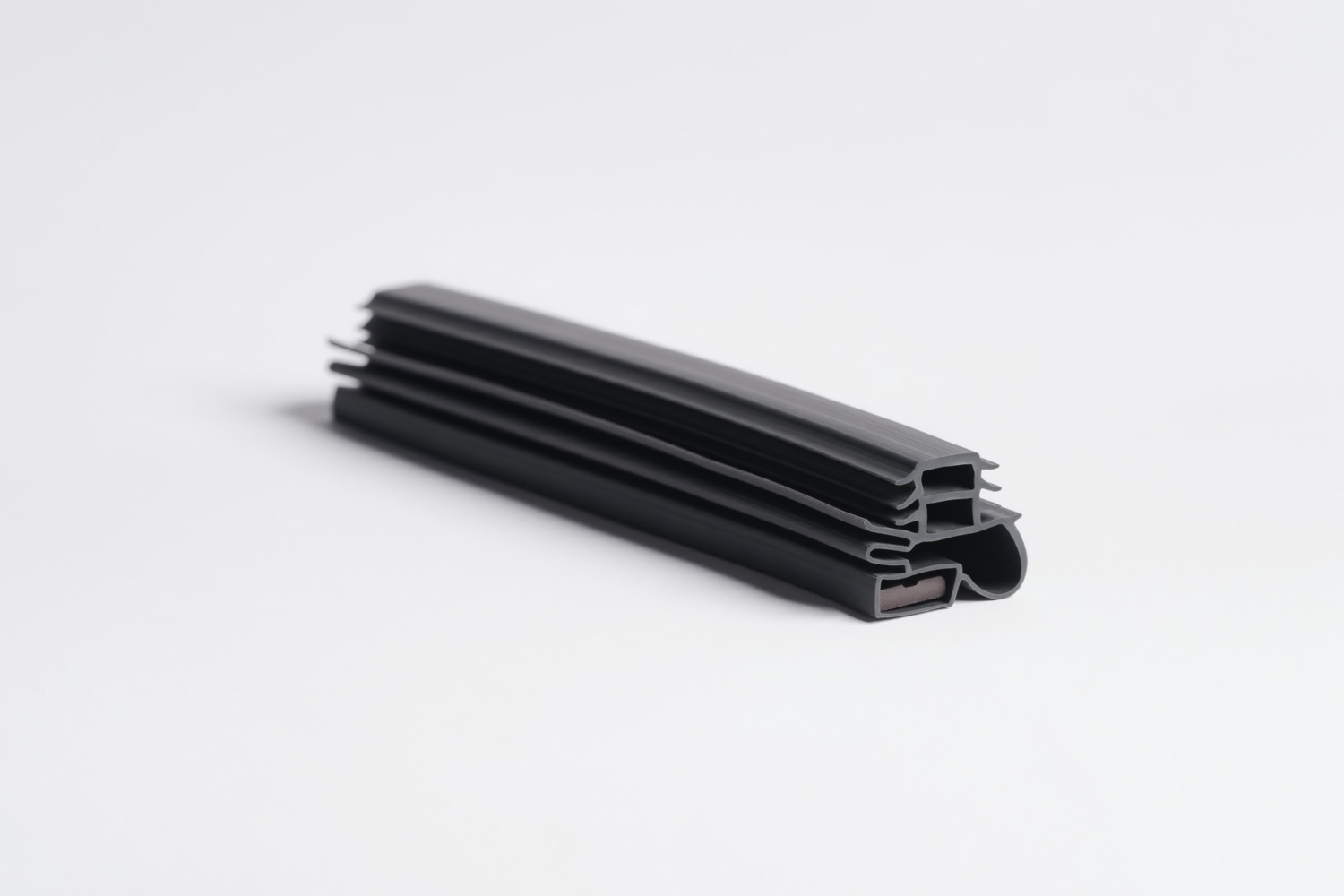
2. Magnetic Integration: Flexible PVC profiles easily accommodate embedded magnetic strips. The right PVC profile, combined with a high-quality magnet, creates an airtight seal and a repelling force against the steel body of a fridge.
3. 100% Recyclability: PVC has a theoretical lifespan of 140 years. Facilities can recycle the material roughly seven times, depending on the specific grade, making it an environmentally responsible choice for appliance manufacturers.
4. Limitless Customization: PVC can be extruded into complex shapes that rubber doesn’t easily replicate. This includes dart profiles, flap profiles, compression profiles, and lip profiles in any required color.
How Intertrade Manufactures High-Quality PVC Gaskets
The performance of a PVC gasket depends entirely on the quality of the manufacturing process. Our 12,000-square-meter facility in the 10th of Ramadan City allows us to produce up to 10,000 gaskets a day, with the capacity to scale to 20,000 units.
We carefully select raw materials and additives from market leaders in the USA, Italy, and Brazil. This allows us to formulate specialized PVC compounds that resist both high and low temperatures. Our state-of-the-art facilities feature advanced welding machines and mistake-proof extrusion lines.
Every batch of our PVC compound undergoes testing by CSI LABS to verify quality and dimensional stability. Our strict quality control procedures involve rigorous checks on exact measurements, magnetic properties, and welded corners before any order leaves the factory floor. We currently offer over 150 profile types designed for commercial fridges, deep freezers, and cabinets.
Explore our full range of profiles and engineering capabilities on our Products page.
Intertrade: Your Reliable PVC Gasket Supplier in the UAE
While EPDM works perfectly for extreme cold and outdoor weathering, custom-formulated PVC provides the best balance of cost, durability, and magnetic sealing power for the majority of commercial and domestic units.
If you’re an OEM or distributor looking for a reliable PVC gasket supplier in the UAE, the broader Middle East, or Europe, we have the capacity and engineering expertise to meet your production volume. We supply both standard profiles and custom-engineered solutions built to your precise technical requirements.
Need product samples or custom specifications for your next manufacturing run?
Contact us to discuss your application and request a quote.